
For Ed Bedford, designing and building things was never really a career choice. It was part of the family.
Ed grew up in England surrounded by an unusual family history of engineers, inventors, test pilots and motorcycle racers. It was an environment in which questioning how something worked, taking it apart, improving it and occasionally creating something entirely new was simply normal.
A FAMILY OF INVENTORS
Ed's grandfather, Tim Bedford, was an engineer and prolific inventor whose career was defined by a desire to solve problems. After beginning his engineering career with Rolls-Royce in Derby, where he worked extensively on fuel systems, Tim turned his attention in the 1960s to an entirely different challenge.
Working in Burton upon Trent and testing prototypes on the River Trent, Tim developed a compact powered personal watercraft that evolved into a production machine called the Surf Blazer. It was the invention of what we now know as the modern Jet Ski.
The Surf Blazer progressed far beyond a workshop prototype. Tim formed Dynamic Developments Ltd. to manufacture it, the invention was temporarily placed under a secrecy order by the British Ministry of Defence, and in 1970 it was demonstrated to a national audience on the BBC's Tomorrow's World. It later even appeared in Doctor Who.
Tim was an inventor rather than an empire builder. When financial backers wanted to expand the business, he sold the patent rights and moved on to another challenge, this time focusing on alternative fuels.
Decades before dependence on fossil fuels became a mainstream concern, Tim was already developing ways to run conventional engines using methane and LPG. He created conversion technology, established another business around the work and secured patents connected with the development of engines capable of operating on gaseous fuels.
The engineering showed considerable promise, but progressing it commercially proved difficult. Government restrictions made obtaining the quantities of gas required for testing and continued development extremely difficult at a time when petrol and diesel also represented important sources of tax revenue. The technology therefore encountered barriers that had little to do with whether the engineering itself worked. Had it been given greater room to develop, alternative-fuel transportation may have evolved very differently.
ENGINEERING IN THE AIR
Ed's great uncle, Alfred William "Bill" Bedford, took that same willingness to challenge convention into aviation.
After flying fighters with the Royal Air Force during the Second World War, Bill became a test pilot and ultimately Chief Test Pilot at Hawker, where he became one of the central figures in the development of vectored-thrust vertical and short takeoff and landing aircraft.
On October 21, 1960, Bill lifted the experimental Hawker P.1127 into its first tethered hover. Remarkably, he did it while recovering from a broken ankle, with his leg still in plaster.
The aircraft represented a fundamentally different approach to flight. Its vectored-thrust system allowed the direction of the engine's thrust to be changed, making vertical flight possible without requiring an entirely separate propulsion system. Bill helped demonstrate that the concept was not simply theoretical, but something that could work in a real aircraft.
He later pioneered V/STOL operations at sea, flying the P.1127 from HMS Ark Royal in 1963, and made the first flight of the production Harrier in August 1966. The experimental aircraft he helped develop ultimately evolved into one of Britain's most recognizable military aircraft, the Harrier Jump Jet.
His contribution to British aviation earned him an OBE, the Air Force Cross and a number of the country's major aviation honors.
A FAMILY OF RACERS
Engineering was only one side of the family. Motorcycle racing was another.
Kevin Mitchell competed at the highest level of the sport, including the 500cc Grand Prix World Championship, the premier class that would later evolve into today's MotoGP. His Grand Prix career placed him on the same grids as some of the defining riders of the era, and he was also a two-time winner at the North West 200.
Alex Bedford became one of Britain's leading 125cc racers, competing at British, European and World Championship level. At the 1988 British Grand Prix, racing as a privateer against factory-backed international competition, Alex was running in second place before a failure of the titanium sprocket bolts forced him to retire. For a privateer to be in that position in a World Championship Grand Prix was an exceptional achievement. Alex went on to become British 125cc Champion.
George Bedford built an accomplished racing career of his own, particularly in British 125cc competition. After approximately 25 years away from the sport, he returned to racing in his early 50s and immediately proved that very little of his speed had disappeared. Riding a Honda NSF250R Moto3 machine, he won four races from his first four starts, put together a run of ten consecutive class victories and captured both the 126–450cc and Open 500cc EMRA Championships in 2022.
George continued competing, returning to 125cc machinery and racing in the ACU 250/125 National Championship. At Cadwell Park in 2024 he swept all three 125cc races, decades after his original racing career.
Graeme Mitchell established a formidable reputation in 250cc racing and was regarded as one of the fastest 250cc riders of his era over a single lap. He finished second in the 1989 British 250cc Championship, won the Indian Grand Prix that year and competed successfully at both national and international level. His career also included strong North West 200 performances and, later, holding the Donington Park Supersport lap record.
Growing up around that level of competition inevitably influenced Ed, who went on to race motorcycles himself. Racing taught him an appreciation for performance, mechanical detail and the difference between something that looks right and something that actually works under pressure. Those lessons followed him long after engineering became the main focus of his career.
FROM ENGLAND TO AMERICA
Ed built a career spanning mechanical engineering, industrial design, product development, manufacturing and commercialization before moving from England to the United States.
Rather than becoming narrowly focused on one branch of engineering, he became increasingly interested in the entire process of creating a physical product, from the first idea and initial engineering through prototyping, manufacturing, supply chain and ultimately bringing the finished product to market.
He spent approximately seven years working within a large North American building-products company, ultimately moving into senior product-development leadership and working across increasingly complex engineering projects and sustainable building technologies.
His work later expanded across a broad range of products and industries, from consumer products and medical technologies to sustainable building systems and high-performance electric motorcycles.
One particularly demanding chapter involved the development of an extremely complex countertop beverage-delivery system together with a portable reusable bottle and proprietary pod system. What began as a product-development challenge eventually required Ed to work across almost every part of creating the product and business, including engineering, manufacturing, suppliers, packaging, branding, marketing and commercialization.
It was an extraordinarily difficult period, but it also gave him an unusually complete understanding of what it takes to turn a complicated idea into a consumer product capable of being manufactured at scale.
Ed later established his own product-design and engineering consultancy, giving him the opportunity to work with companies at very different stages of development and across a wide range of industries. His work included the press-fit aroma pod and manufacturing development for Air Up, adding further experience in high-volume consumer-product development and international manufacturing.
THE IDEA THAT BECAME SHARKBITE
After nearly two decades working in product design and engineering, Ed had become accustomed to noticing everyday products that seemed unnecessarily complicated. Hydration sticks were one of them.
The basic idea behind powdered hydration made enormous sense. Instead of manufacturing and transporting bottles containing mostly water, a small packet of concentrated powder could be carried almost anywhere and mixed when needed. But Ed felt the experience of actually using those packets had barely been considered.
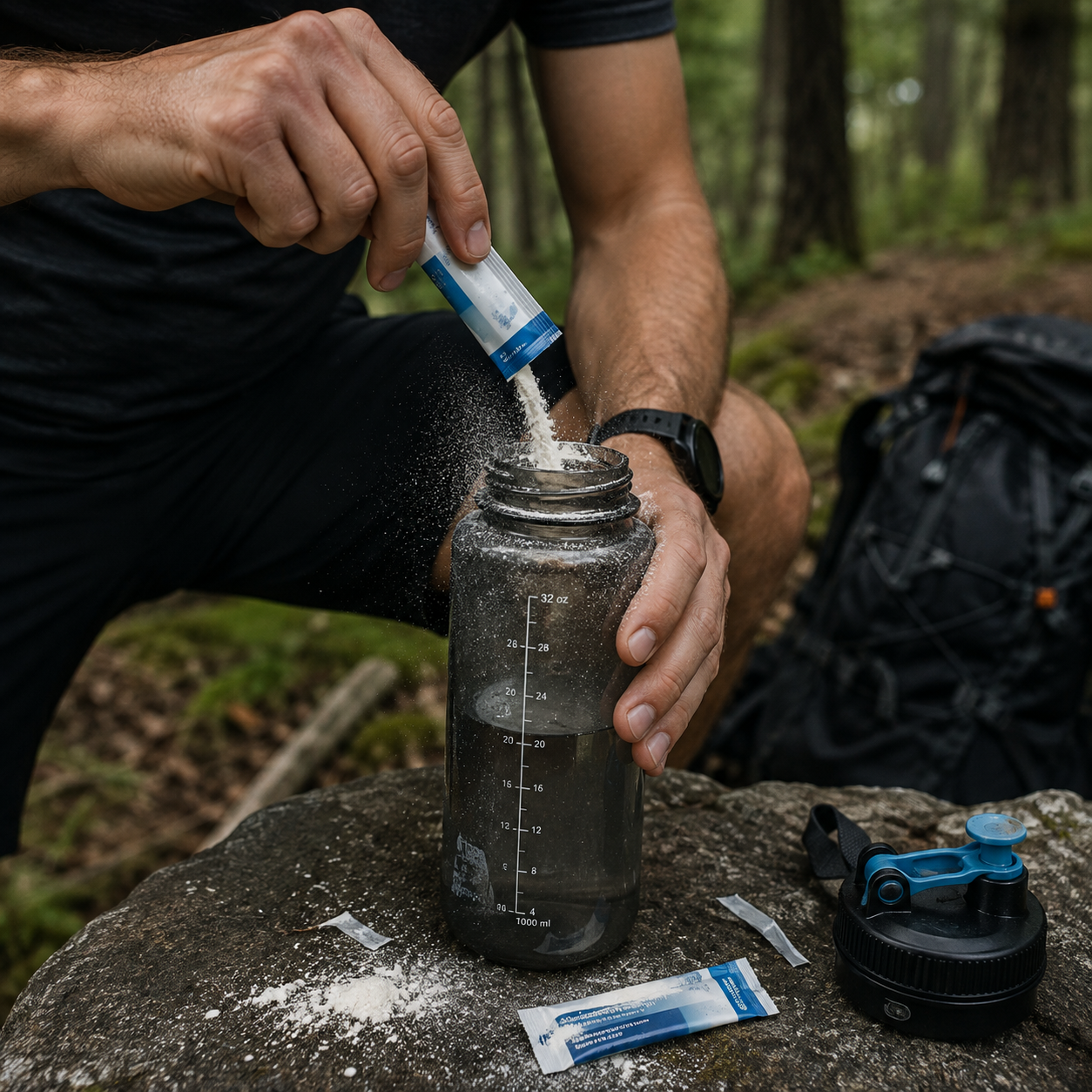
Opening a stick, pouring it through the narrow neck of a bottle and dealing with the torn packaging was awkward, particularly while cycling, hiking, driving or doing anything else where stopping and using two hands wasn't convenient.
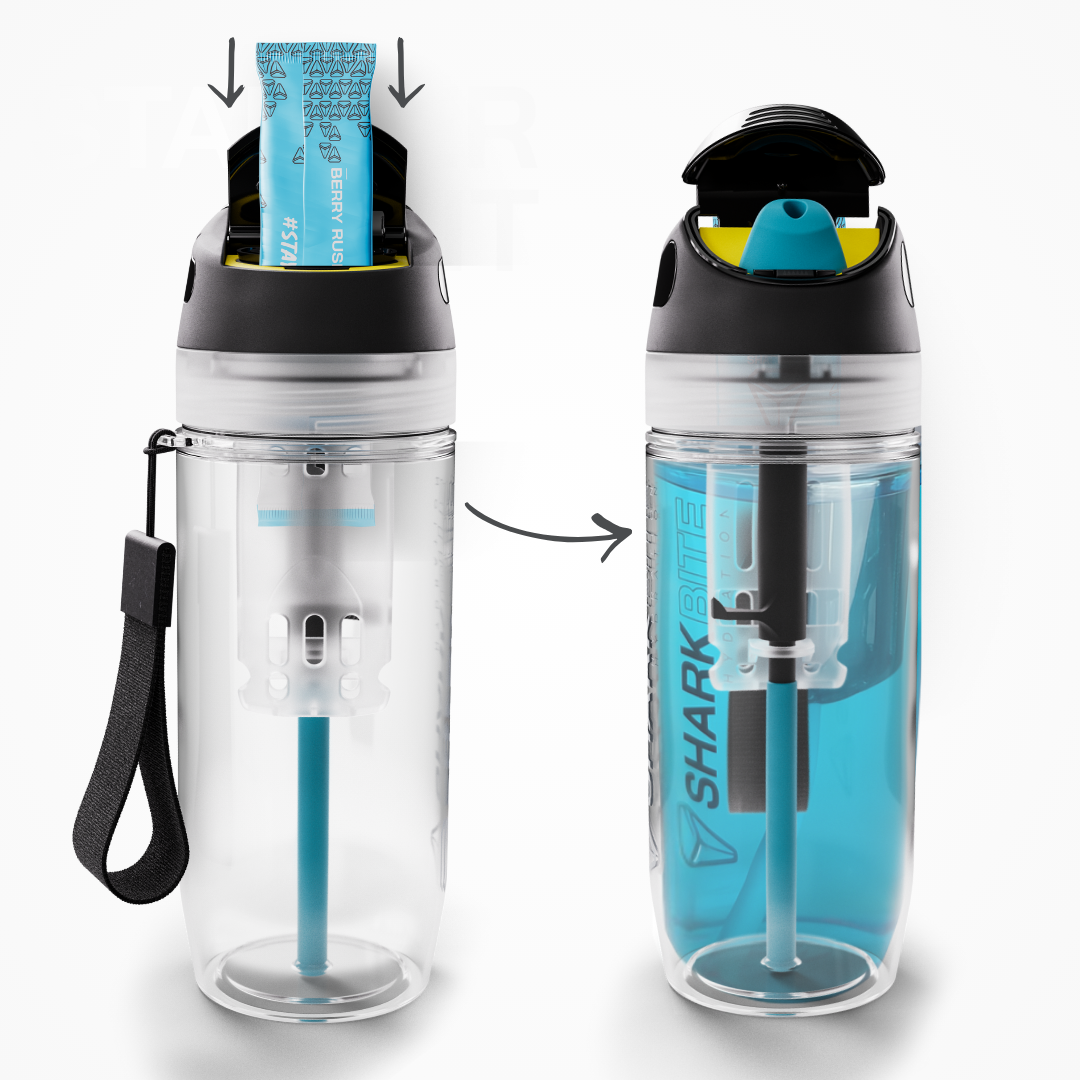
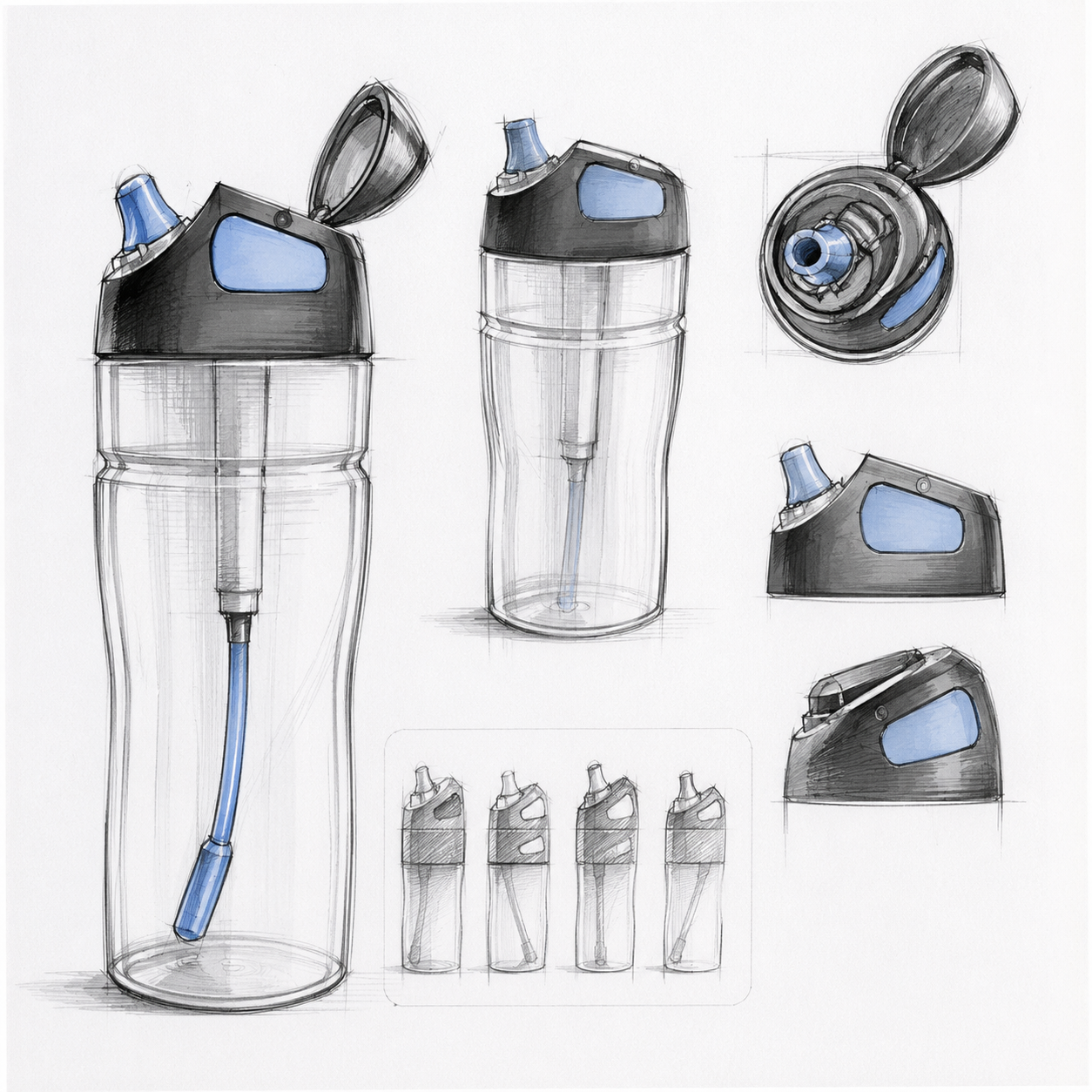
Rather than approaching the problem as an opportunity to create another hydration brand, Ed initially approached it as a product-design problem. He began exploring whether the bottle itself could store and open the stick pack, allowing someone to carry hydration with them and release it into the water only when they wanted it.
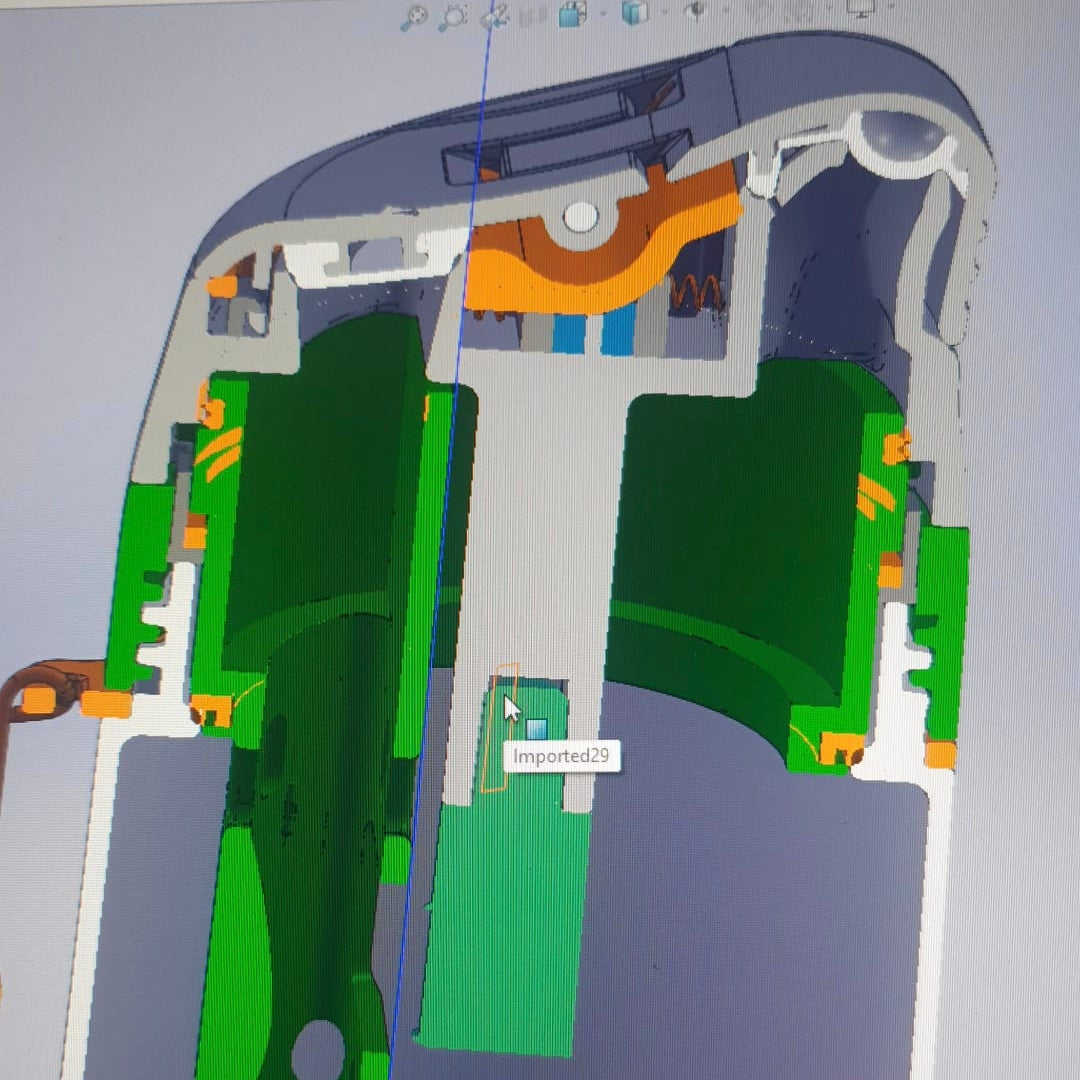
That relatively simple idea became considerably more difficult to engineer than it first appeared. Over several years, Ed developed and refined the mechanism through numerous prototypes before arriving at the system used by SharkBite today.
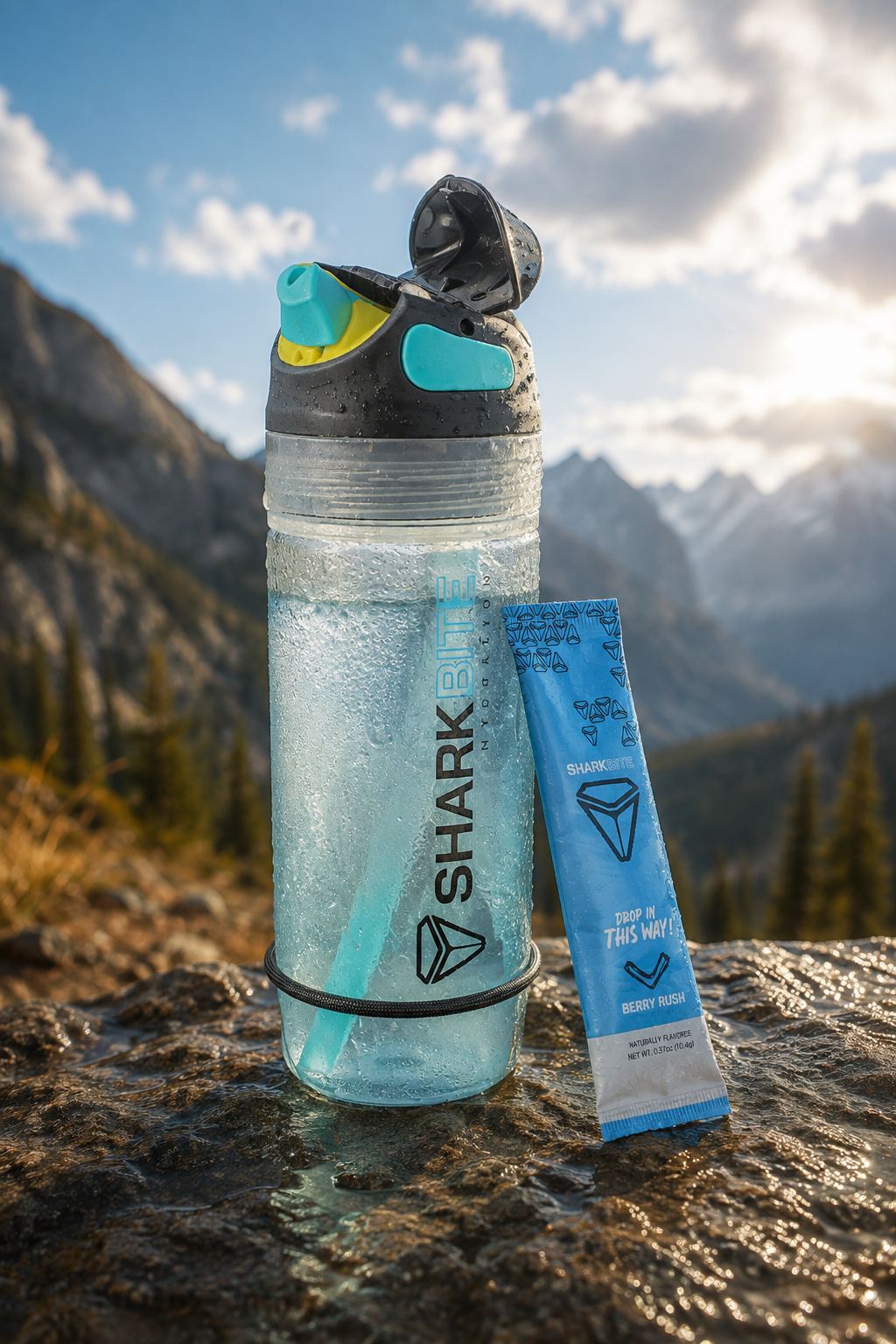
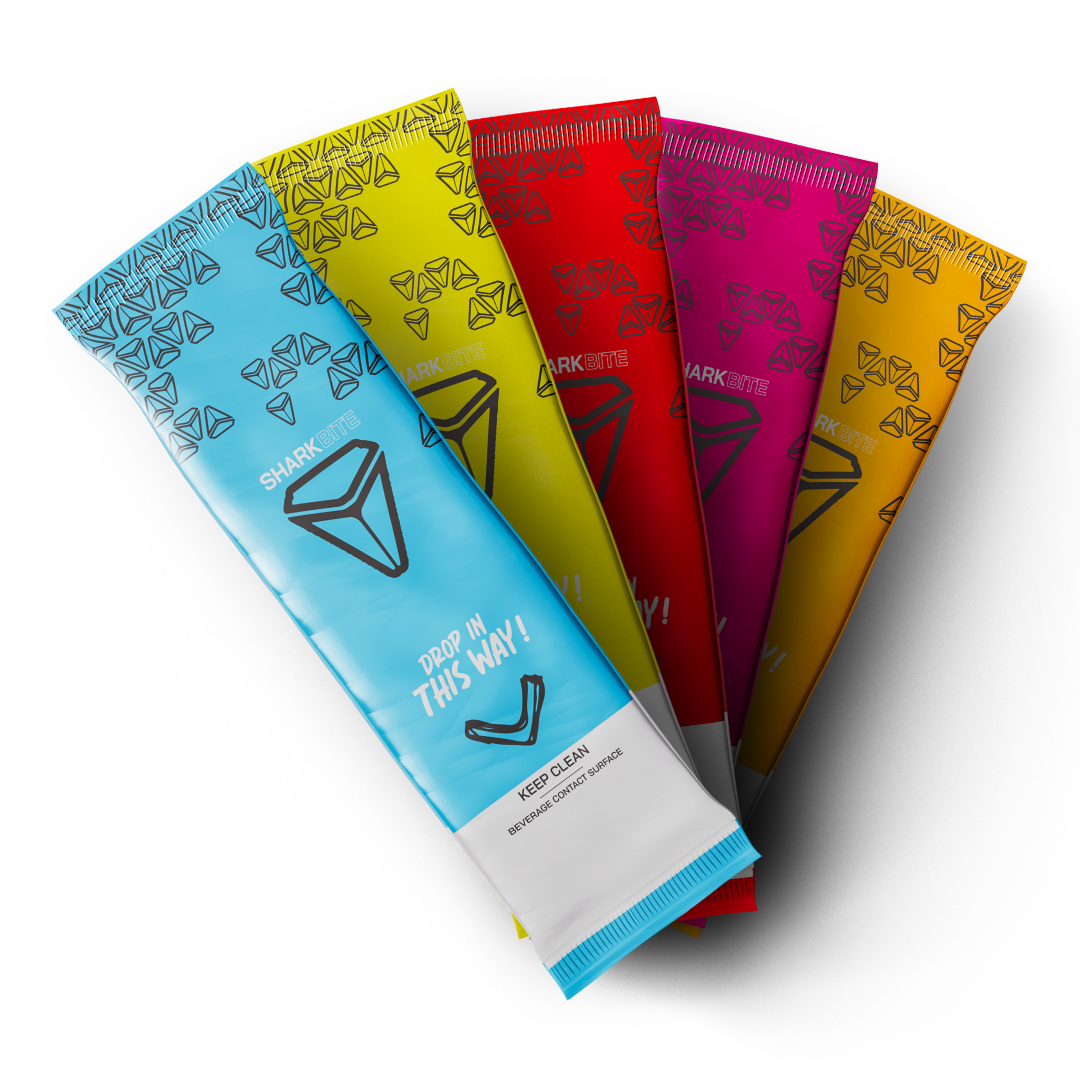
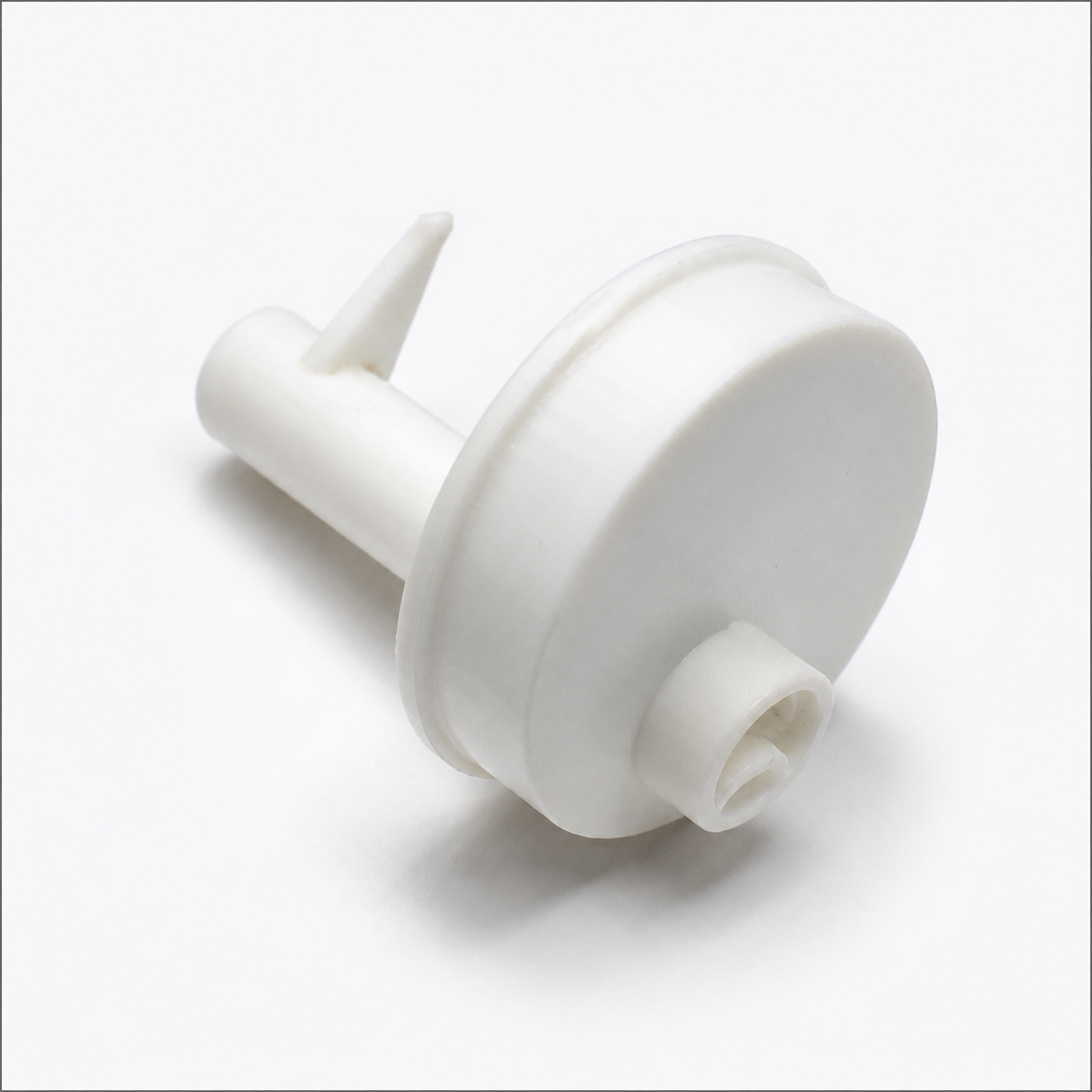
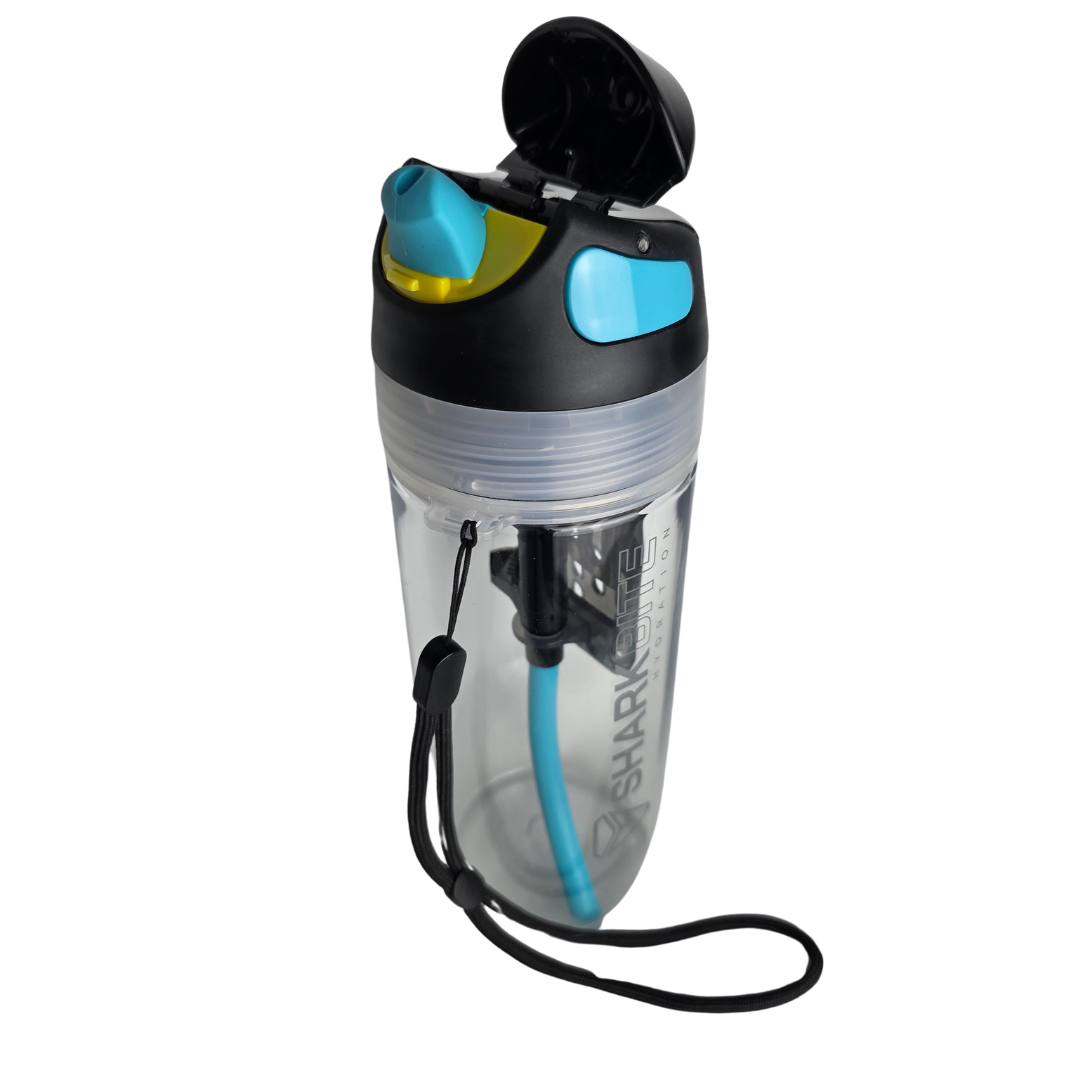
The resulting bottle stores the stick inside and opens it within the bottle, turning what had previously been several separate actions into one integrated system. The stick pack itself was developed alongside the bottle, with its proportions and construction designed specifically around the opening mechanism. Its tear design also keeps the opened end attached rather than creating another small piece of loose packaging.
The bottle and stick therefore weren't developed as two unrelated products. They were engineered together as a single system.
DEVELOPING THE HYDRATION FORMULA
Once the bottle was taking shape, Ed turned his attention to the hydration formula itself. His background was engineering rather than nutrition, so developing the formula meant spending considerable time understanding the science of hydration and working with specialists and ingredient suppliers to determine what the product should contain and why.
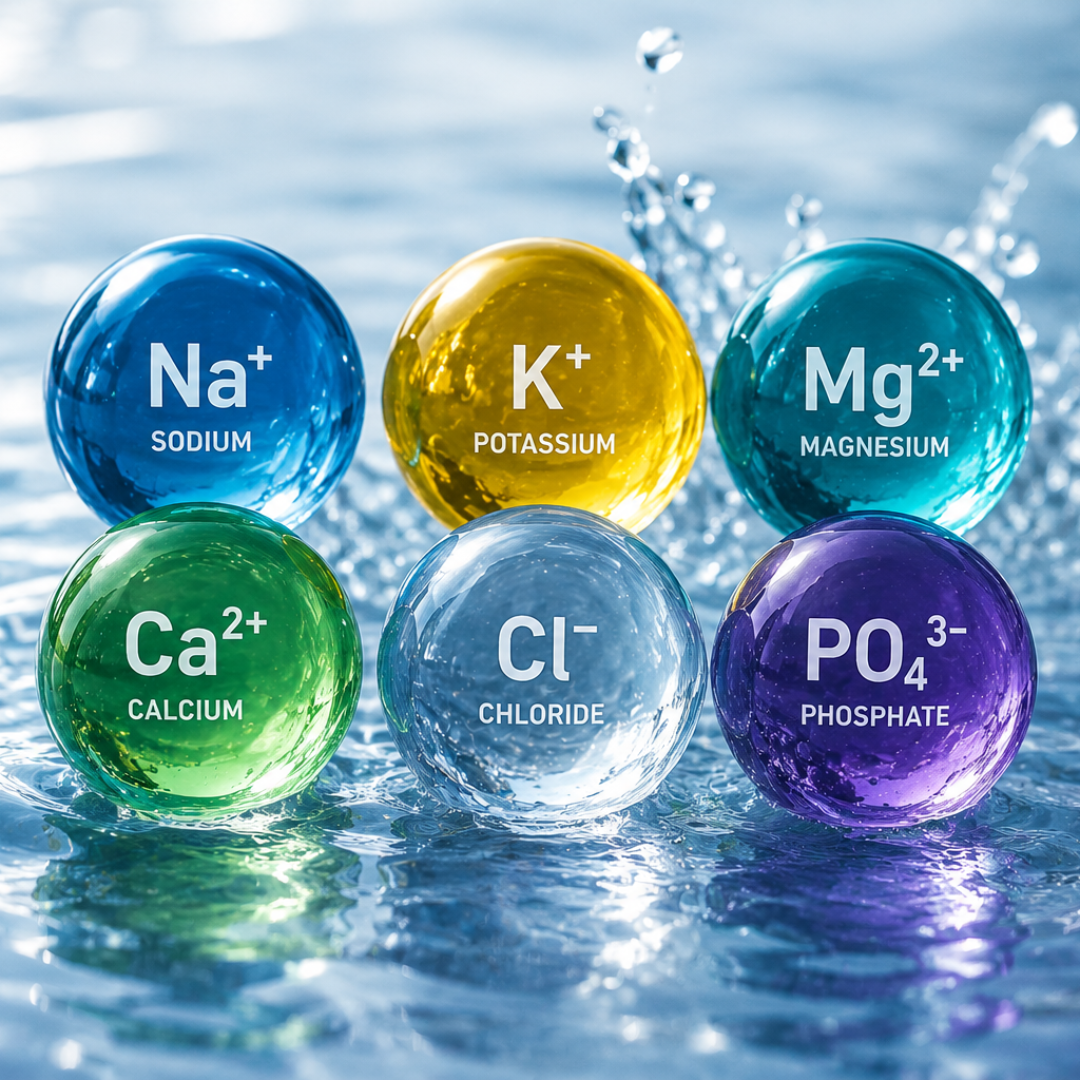
The eventual SharkBite formula contains all six electrolytes together with zinc and vitamin C. One of the more deliberate decisions was to include 1.5 grams of cane sugar rather than pursuing a completely sugar-free formula. The small amount of glucose works alongside sodium in the body's sodium-glucose cotransport process, so its inclusion has a functional purpose beyond sweetness.
The formula went through extensive development and refinement as Ed worked to balance nutritional performance with something people would genuinely enjoy drinking.
Developing the formula also changed the scope of the original idea. SharkBite was no longer simply an invention for opening hydration sticks more conveniently. Ed was now building the bottle, the delivery system, the hydration product and the brand around them.
BUILDING SHARKBITE
Turning that work into a commercially manufactured product proved considerably harder than developing the original concept. SharkBite required custom tooling and manufacturing overseas, specialist packaging, formulation and blending in the United States, and coordination between suppliers that had never previously produced a system like it.
One of the earliest manufacturing relationships in China eventually broke down and cost the project roughly a year. Ed had to rebuild much of the supply chain while continuing to develop the product and deal with the financial reality of funding a young company.
The process involved repeated redesigns, supplier changes, tooling work, formula development, packaging development and manufacturing setbacks before the individual parts finally began coming together as a product that could be manufactured and sold reliably.
Ed remains unusually involved in SharkBite today because, for much of its existence, there hasn't been a large organization behind it. He has been responsible for everything from the physical product and hydration formula to suppliers, manufacturing, packaging, branding, commercialization and the day-to-day work of getting SharkBite into customers' hands.
That breadth of involvement is a continuation of the career that preceded SharkBite. By the time he started the company, Ed understood that creating a successful physical product involved much more than designing the object itself.
THE NEXT GENERATION
Today, Ed lives in the United States with his wife and their daughter, and becoming a father has given the Bedford family story another dimension.
The stories of Tim Bedford developing the machine that would become the modern Jet Ski on the River Trent, Bill Bedford helping pioneer the aircraft that became the Harrier, and Kevin Mitchell, Alex Bedford, George Bedford and Graeme Mitchell competing at extraordinary levels of motorcycle racing are more than interesting pieces of family history.
They form part of the environment Ed grew up in and help explain why spending years trying to reinvent something as seemingly ordinary as a hydration bottle never seemed particularly unusual.
SharkBite grew from that same instinct: noticing something that could work better, understanding the problem properly and then doing the difficult work required to create a better solution.