

Why Do You Need All Six Electrolytes?
When people think about electrolytes, sodium usually gets most of the attention. And for good reason: sodium is one of the most important electrolytes for maintaining fluid balance, particularly when you're sweating.
But sodium isn't the only electrolyte your body uses.
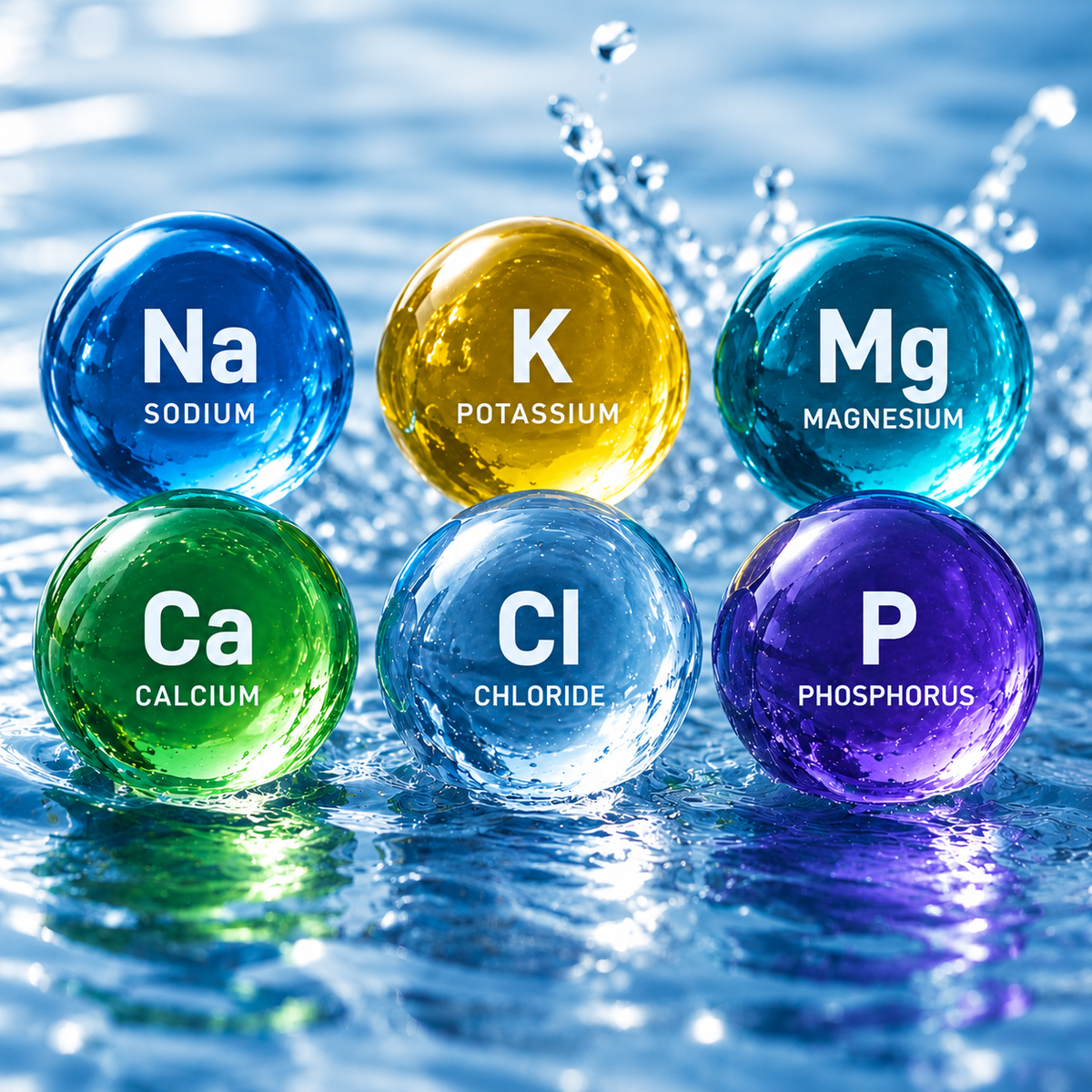
The six major electrolytes commonly discussed in hydration and normal physiological function are sodium, potassium, magnesium, calcium, chloride and phosphorus (primarily present in the body as phosphate). Each plays a different role in fluid balance, nerve signaling, muscle function and normal cellular processes.
So what does each electrolyte actually do, and do you really need all six in an electrolyte drink?
What Are Electrolytes?
Electrolytes are minerals that carry an electrical charge when dissolved in water or body fluids.
Your body relies on them for processes including:
- Maintaining fluid balance
- Nerve signaling
- Muscle contraction and relaxation
- Maintaining normal cellular function
- Supporting acid-base balance
Exercise can increase losses of water and electrolytes through sweat, although the amount lost varies significantly from person to person and depends on factors such as exercise duration, intensity, temperature, humidity and individual sweat rate.
That's why hydration isn't simply about drinking as much water as possible. It's about maintaining the appropriate balance of fluid and electrolytes.
The Six Electrolytes Explained
1. Sodium
Sodium is the major positively charged ion in the fluid outside your cells and plays a central role in maintaining fluid balance.
It's also one of the primary electrolytes lost in sweat.
During prolonged exercise, particularly in hot conditions or for people who sweat heavily, sodium losses can become substantial. Sodium in a hydration beverage can also help the body retain consumed fluid.
This is why sodium receives so much attention in sports hydration.
But more sodium isn't automatically better. Sweat rates and sweat sodium concentrations vary considerably between individuals, so hydration requirements aren't identical for everyone.
2. Potassium
Potassium is the major positively charged ion inside your cells.
It contributes to normal fluid balance, nerve transmission and muscle function. Potassium is also lost through sweat, although generally in considerably smaller concentrations than sodium.
Rather than thinking of sodium and potassium as competitors, it's better to understand that they operate across different fluid compartments in the body.
3. Magnesium
Magnesium is involved in hundreds of biochemical reactions and contributes to normal muscle and nerve function.
Although magnesium can be lost through sweat, the amounts are generally much smaller than sodium losses. Current evidence does not support the idea that simply adding large amounts of magnesium to a hydration drink automatically improves athletic performance or prevents exercise-associated muscle cramps.
Magnesium matters physiologically. That doesn't mean more is always better.
4. Calcium
Most people associate calcium with bones, but calcium also plays an important role in muscle contraction and nerve signaling.
Like magnesium, calcium is generally conserved relatively well by the body during exercise compared with sodium. Its importance in normal physiology shouldn't be confused with a claim that large amounts are required in every hydration drink.
5. Chloride
Chloride doesn't receive nearly as much attention as sodium, but it's an important part of the electrolyte picture.
It is the major negatively charged ion in extracellular fluid and works closely with sodium in maintaining fluid balance. Sodium and chloride are also the two primary electrolytes lost in sweat.
When you lose salt through sweat, you're primarily losing sodium and chloride together.
6. Phosphorus
In the body, phosphorus exists primarily in the form of phosphate.
Phosphate is involved in cellular processes including energy metabolism and contributes to normal physiological function. Unlike sodium and chloride, however, phosphorus isn't typically considered a major sweat-replacement target.
That distinction matters: an electrolyte can be important to human physiology without being lost through sweat in the same quantity or requiring aggressive replacement during exercise.
Do You Actually Need All Six Electrolytes in a Hydration Drink?
This is where electrolyte marketing can become misleading.
Your body needs all six of these minerals for normal physiological function, but that does not mean you lose equal amounts of all six when you sweat or that every athlete needs large quantities of each one during exercise.
Sodium and chloride generally account for the largest electrolyte losses in sweat. Potassium is also lost, but at lower concentrations, while losses of minerals such as magnesium and calcium are considerably smaller.
Your individual requirements also depend on how long you're exercising, how much you're sweating, environmental conditions, diet and how quickly you need to rehydrate.
For a short, easy workout, water and a normal diet may be entirely adequate.
During longer or harder exercise, heavy sweating, hot conditions or situations where substantial fluid and electrolyte losses occur, a properly formulated electrolyte drink can become more useful.
Why Doesn't SHARKBITE Just Use Sodium?
When we developed SHARKBITE, we didn't want to build a formula around whichever electrolyte happened to produce the biggest number on the front of a packet.
We chose to include all six electrolytes: sodium, potassium, magnesium, calcium, chloride and phosphorus, with sodium remaining a central part of the hydration formula.
A serving of SHARKBITE provides 300 mg of sodium, alongside the other five electrolytes.
The goal isn't to claim that every electrolyte is lost equally through sweat. They aren't.
It's to create a broader electrolyte profile while keeping the formulation straightforward and avoiding unnecessarily extreme doses.
What About Sugar?
Electrolytes are only part of the hydration story.
Glucose and sodium can be transported together across the small intestine, a mechanism that has long formed part of the science behind carbohydrate-electrolyte and oral rehydration solutions.
That's one reason SHARKBITE contains a deliberately small amount of cane sugar: 1.5 grams per serving.
We'll explore glucose, sodium and hydration in more detail in a separate article.
The Bottom Line
You don't need to chase the largest electrolyte numbers you can find.
Sodium is particularly important for replacing sweat losses and supporting fluid balance during prolonged or heavy exercise. Chloride accompanies much of that sodium loss, while potassium, magnesium, calcium and phosphorus each have distinct physiological roles.
The important question isn't simply:
“Which electrolyte drink has the most electrolytes?”
A better question is:
“Does the formulation make sense for how and when I'm using it?”
That's the approach we take with SHARKBITE: understand what each ingredient is doing, use purposeful amounts, and don't add something simply because it makes the label look more impressive.